
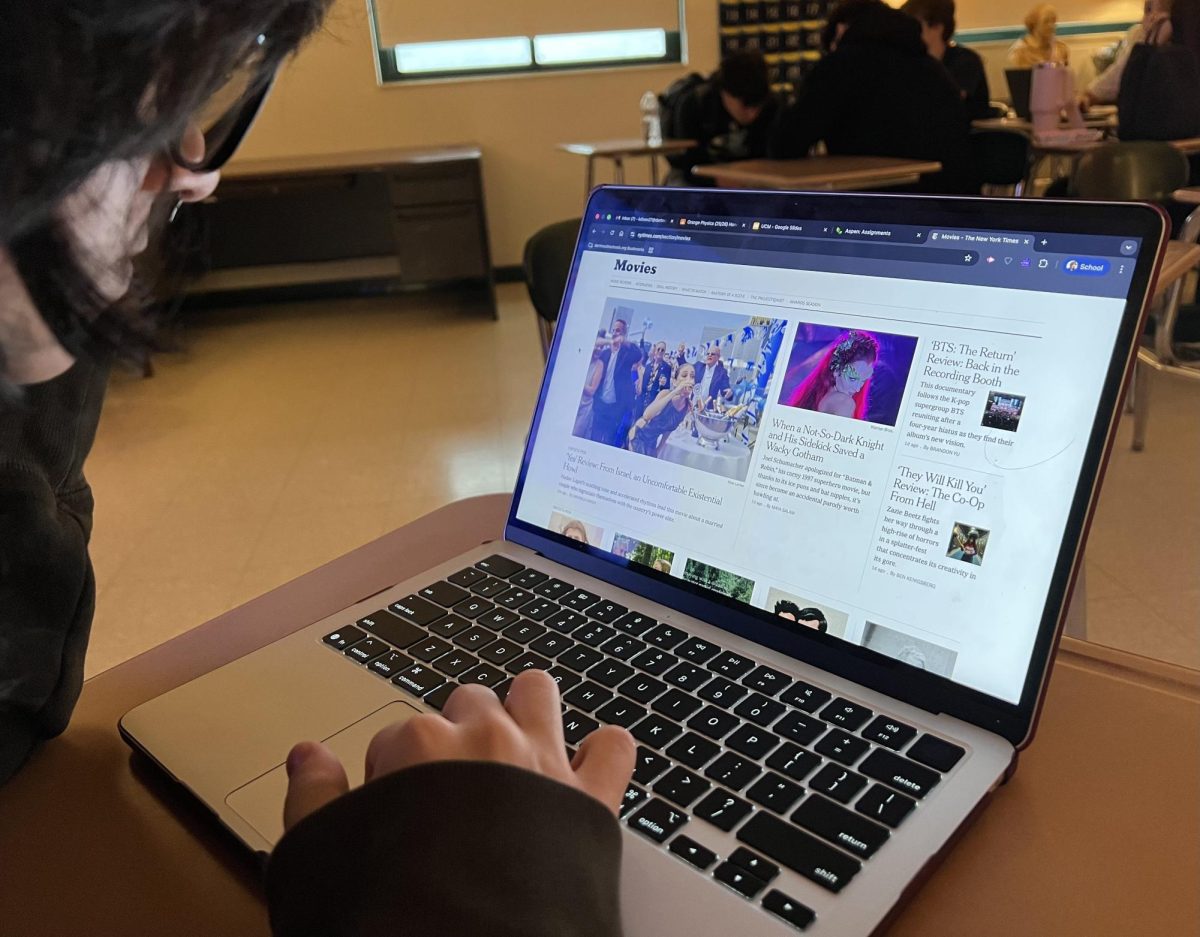
Long gone are the days of completing the Wordle, Connections, and part of the Spelling Bee and still having 58 minutes left in the 62-minute class period. DHS has recently been blessed with digital New York Times subscriptions, allowing students and staff alike to access all the features that come with a subscription. This includes the articles, the games, The Athletic, and the archive of articles going all the way back to the 1800s.
Individuals with a subscription can take advantage of it not only on their school devices, but also on their personal devices, as long as their school-issued email is used to log in.
English Department lead teacher Will Higgins was one of the leaders behind this effort. This year was not the only time he has looked into getting a schoolwide subscription.
“It’s always been really, really expensive,” Higgins explained. “I think one time I looked into it several years ago, and it was, like, six or seven thousand dollars. I’d seen somewhere in November, December last year that they had changed their pricing for public schools, and I think it was $2,000 all together for 1,000 licenses.”
Higgins and DHS principal Ryan Shea agreed that the cost would be worth the benefits of students having a subscription, but the money had to come from somewhere. According to Higgins, a combination of textbook money for the English departments, funds used for buying new books, and an account for student funds covered the expenses.
Higgins notes many benefits to the subscription, such as using the articles as a research source, getting access to the archives all the way back to 1856, and utilizing The Athletic, NYT Cooking, and Wirecutter. Arguably the most important—or, at least, most appreciated by students—aspect of the subscription is the access to the New York Times games, which were partially available without a subscription, but now can be played fully.
“I personally enjoy that we have access to the games along with the other benefits,” junior Arushi Patel said. “I feel that it may hinder some kids’ work ethics and/or focus. However, in general, I think this subscription is really beneficial even if it is just to guess five-letter words.”
“If students are playing games on their computer in school, I mean, the New York Times games are smart games,” Higgins added.
Other teachers, such as English teacher Jessica Lassey, sees the games as a pathway to getting students more interested in reading the articles.
“Personally, I love the idea of the free subscription for all staff and students,” said Lassey. “What a great way to get students interacting with a news publication. I think that many students might start using it for the games, and end up reading the articles. Either way, students are engaging their minds using text.”
The subscription didn’t come without flaws, though. Money may have come easily enough for the first year of subscriptions, but future years of subscription funds seem to be harder to come by.
“We were able to kind of scrape together the funds for one year, and I think that’ll take us up until January of next year,” says Higgins. “We’re going to have to kind of figure out a more steady stream of income to be able to fund it. I’m okay with the money coming partially out of our textbook funds, but we definitely have to find something that’s kind of yearly.”
Some students also note the lack of use, either because of the absence of knowledge about the subscription or because students simply don’t want to—or know how—to navigate it.
“I think that it’s obviously a good source of information,” junior Gabriella Ligotti said. “But realistically, one out of every ten students is using it for that purpose. In my AP Lang class, we were told to use it for our research paper, and I’m pretty sure about two kids in my class used it. Yes, the games are fun to play and a nice brain break, but I feel like the money used to pay for it could be spent in better places.”
Nonetheless, teachers, some students, and Higgins all believe the subscription is worthwhile, regardless of the price.
“So many current events happening in our world are behind a paywall, and The New York Times being available to our students helps them stay educated on real world issues that are impacting them and their families,” said computer science teacher Thomas Mayall. “I wish we had more access to other sites as well so our students could diversify where they are getting their news and get as many reliable opinions and access to reliable news outlets as possible.”
“I think it’s very important that students have access to a reliable and reputable newspaper, especially with all that’s happening in the world right now,” one student who wishes to stay anonymous noted. “It’s important to know that the information students are getting is quality and unbiased, which The New York Times does pretty well. I’m sure that most students are excited about access to games as well, so that’s a bonus.”
The benefits outweigh the drawbacks, and students having access to a reliable, noteworthy, and credible news source with just the click of a few buttons is something that can’t, and shouldn’t be taken for granted.
“I think all news sources are kind of under attack right now for being political,” Higgins commented. “The New York Times is included in that. But I still think that they are probably the most moderate, most accurate source out there. I think it’s important for students to have access to that.”
Editors’ Note: To claim your personal New York Times account, make sure to sign out of any account you are currently logged into, follow this link, and create an account using your school-issued Gmail login.









Samuel Brodsky • Apr 1, 2026 at 10:38 am
seems like a no-brainer at that price. there’s plenty of way less useful things we spend money on.